Warning Signs Your Residential Lift May Need Service
A residential lift can make it much easier to move people, groceries, luggage, and other items between levels of a home. Once it becomes part of your everyday routine, you also become familiar with how it normally sounds, moves, and responds.
That makes it easier to notice when something changes.
A new noise, delayed response, or uneven movement may be a sign that your lift needs professional attention. Addressing these changes early can help prevent a small concern from becoming a larger problem.
Ready to Start Planning Your Lift Installation?
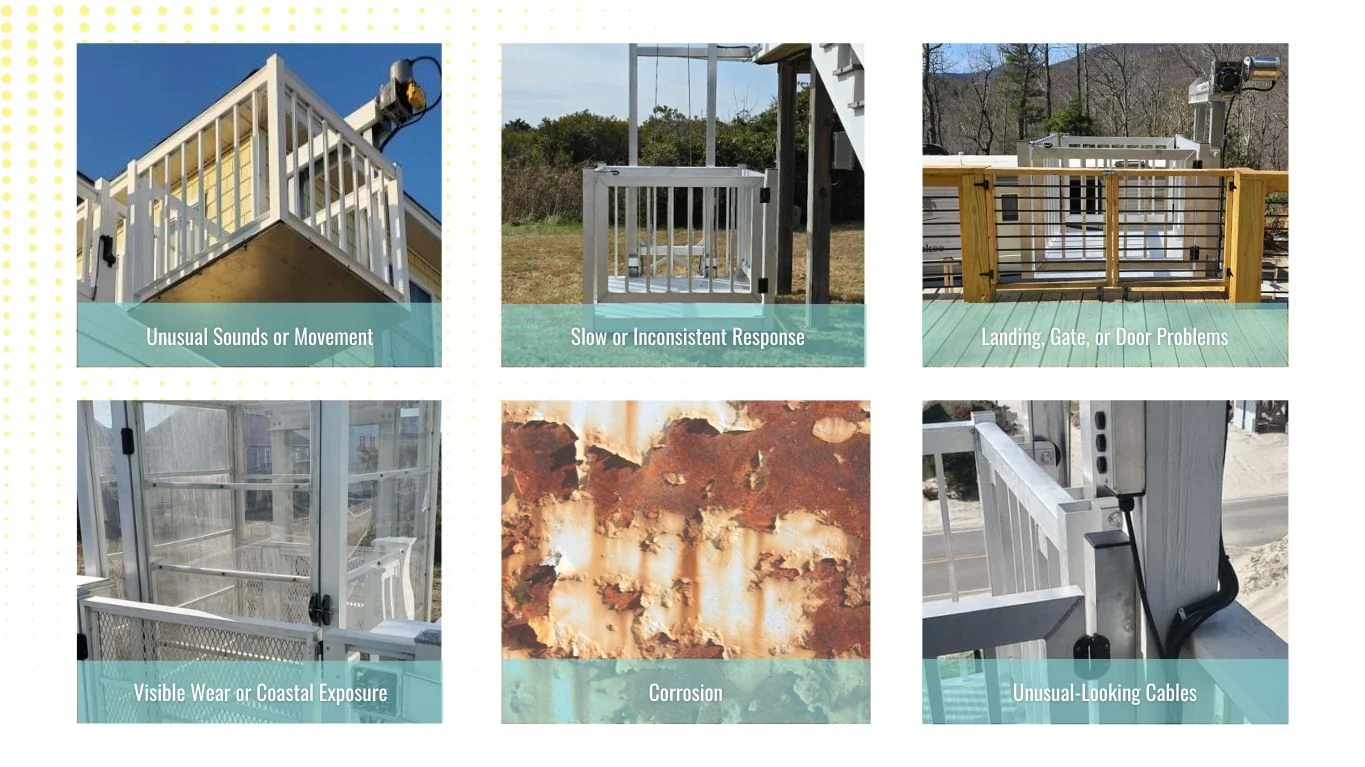
Residential lifts naturally make some noise while operating, but new or unusually loud sounds should not be ignored.
Grinding, squeaking, scraping, or rattling may point to a component that is worn, loose, or no longer moving as intended. You may also notice that the lift begins to jerk, hesitate, shake, or feel less steady during travel.
If the lift sounds or moves differently than usual, stop using it and contact a qualified technician rather than continuing to operate it to see whether the problem goes away.
Slow or Inconsistent Response
When you press the control, the lift should respond as expected. A noticeable delay, inconsistent operation, or a control that must be pressed more than once may indicate an electrical, mechanical, or control-related concern.
The same applies if the lift works normally from one control but not another, or if it operates sometimes but not others. Even when the system appears to return to normal, intermittent problems should not be ignored.
Make note of what happened, which control you were using, and whether the issue occurs regularly or only occasionally. This information may help the service team identify the cause.
Landing, Gate, or Door Problems
A residential lift should stop correctly at each landing, and its gates or doors should open, close, and secure as intended.
Service may be needed if:
- The lift stops above or below the landing
- A gate does not close completely
- A latch feels loose
- A door becomes difficult to open
- The lift operates when a gate does not appear secure
Do not attempt to adjust sensors, switches, gates, or other safety components yourself. If the lift does not align properly or a gate or door is not working normally, discontinue use until it can be inspected.
Visible Wear or Coastal Exposure
Routine visual checks can also help you notice changes before they affect everyday operation.
Look for loose hardware, damaged controls, unusual-looking cables, corrosion, debris near moving components, or damage to the basket, platform, gate, or enclosure.
Outdoor lifts may require additional attention because they are exposed to rain, humidity, salt air, and changing weather conditions. Do not tighten, lubricate, or adjust mechanical components unless instructed to do so by a qualified professional.
Regular Inspections Help Catch Problems Early
You do not have to wait for an obvious problem to schedule service.
Professional inspections can help identify normal wear, damaged components, and developing concerns before they begin affecting safe or reliable operation. Between inspections, pay attention to changes in sound, movement, controls, alignment, and visible condition.
When something does not feel right, it is better to have the system checked than to continue using it and hope the issue resolves on its own.
Request Residential Lift Service
Your lift should make everyday movement around your home easier, not leave you wondering whether it is operating properly.
Affordable Elevator provides service and support for the cargo lifts and residential platform lifts the company sells and installs. The team can help identify potential issues, explain what is happening, and recommend the appropriate next step.
If your lift sounds, feels, or operates differently than usual, contact Affordable Elevator to request service.